
Have you ever clicked ‘submit’ on a job application and wondered what happens next? Does your resume vanish into a digital black hole? The person on the other side of that screen is a recruiter, and understanding their role is the first step to navigating the hiring process.
A recruiter is essentially a professional career matchmaker. Their primary goal is to find a perfect win-win: a great new team member for the company and a role where you, the candidate, can thrive. This ensures both sides are set up for long-term success.
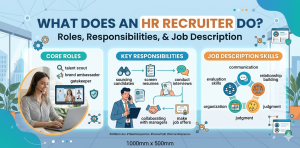
Their work is a journey that guides you from application to your first day. These behind-the-scenes hr recruiter roles and responsibilities reveal a process far more complex than just reading resumes.
Before the Job Post: How Recruiters Create the “Perfect Candidate” Blueprint
Ever read a job description and wondered who wrote it? A recruiter’s duties begin long before the “Apply Now” button appears, starting with a crucial conversation.
The recruiter’s first step is to partner with the Hiring Manager—the person who will lead and manage the new employee. Together, they create a blueprint for the role, defining what skills are truly essential versus just nice-to-have.
This partnership ensures the final corporate recruiter job description is realistic and clear. A detailed list of requirements often signals that the team knows exactly who they need. With this blueprint in hand, the recruiter’s next job is to go find that person.
The Talent Detective: Finding People Who Haven’t Even Applied
With the blueprint ready, a recruiter doesn’t just post the job and wait; they become a talent detective. This is called sourcing: the proactive hunt for qualified people who may not have seen the job opening.
These professionals are known as passive candidates. If a recruiter has ever messaged you “out of the blue” on a professional network like LinkedIn, you’ve been sourced. They saw your experience and thought you might be a great fit, even if you weren’t actively job searching.
This detective work is vital for filling specialized roles. For instance, this is often what a technical recruiter does to find a specific kind of software developer. By building a strong candidate pipeline of both applicants and passive talent, they ensure the company finds the best person available, not just the best person who applied.
Read Related – AI in Recruitment: Shaping the Next Generation of Hiring
Taming the Resume Pile: How Your Application Is Really Screened
After you click “submit,” your application lands in a pool with hundreds of others. To manage this volume, recruiters use software called an Applicant Tracking System (ATS). Think of it as a massive digital filing cabinet, not a robotic judge. Its main job is to keep every application organized so no one gets lost.
A human recruiter then uses this system to filter for essential qualifications, narrowing the field.
- Role: Graphic Designer
- Applications Received: 250
- Filter applied: “Adobe Photoshop”
- Resumes for review: 45
This search helps them focus on the most promising candidates. The key takeaway? Tailor your resume. Including keywords from the job description helps you appear in their searches, dramatically increasing your chances of moving forward.
The First Call: What Recruiters Look For in a Phone Screen
Once your resume has caught a recruiter’s eye, the next step is usually a brief “phone screen.” This isn’t the full interview; it’s a quick confirmation call to ensure what’s on paper matches reality before committing more time.
During this 15-20 minute chat, the recruiter’s goal is to verify a few key things. They’ll ask you to briefly summarize your experience, confirm your salary expectations, and check your availability. This core responsibility ensures only genuinely interested and qualified candidates move forward, saving time for everyone.
To succeed, be prepared with a quick summary of your background and have a clear answer for your salary expectations. Passing this screen signals you’re a strong contender ready for the formal interview stages.
In-House vs. Agency Recruiter: Who Are You Talking To?
The recruiter you speak with is typically one of two types. An in-house recruiter (or corporate recruiter) works directly for the company with the job opening—like someone at Netflix who only hires for Netflix. Their focus is on building their own company’s team.
On the other hand, an agency recruiter works for a separate firm that helps many companies find employees. This explains why one person might contact you about roles at several different businesses. Their duties involve acting as an external hiring partner, matching candidates from their network to various clients’ needs.
So where does Talent Acquisition fit in? Think of it as the bigger-picture strategy. While recruiting focuses on filling today’s open jobs, talent acquisition is the company’s long-term plan to attract, develop, and keep great people. It’s the playbook that guides a recruiter’s work.
From “You’re Hired!” to Day One: A Recruiter’s Final Duties
Once the hiring team decides, the recruiter steps back into the spotlight to extend the job offer. They are responsible for formally presenting the proposed salary, benefits, and start date.
Salary discussions can feel tricky, but the recruiter acts as a neutral go-between, managing the compensation conversation to find a number that satisfies both sides.
A recruiter’s job doesn’t end when you say “yes.” They guide you through onboarding—the process of getting you set up for day one. This smooth transition completes the recruitment lifecycle and is a vital touchpoint for employer branding, making you feel welcome before you even begin.
Read Related – HR Recruitment Process: Meaning, Steps, and Best Practices
Is a Career in Recruiting Right for You?
A recruiter is far more than a gatekeeper. They are part career matchmaker, part talent detective, and part candidate guide, orchestrating the entire journey from job post to offer. This role requires a unique blend of human connection and strategic thinking.
To succeed, you need these key skills for a recruiter:
- Strong Communication
- Empathy for candidates
- Organization and Time Management
- Resilience to handle rejection
While rewarding, many ask, is recruiting a stressful job? The need for resilience proves it can be demanding, but it’s a role built on helping people find their perfect fit.If this path excites you, here’s how to become a human resources recruiter. Start by seeking an HR internship or an entry-level coordinator role in India. Earning a professional HR certification can also make your profile stand out, empowering you to take your first step.