You press “submit” on a job application and it generally feels as though your resume vanishes into an electronic black hole. Some automated systems assist with sorting these files, but a person is really guiding the process on the other side of the screen.
Imagine a human resources recruiter less as a strict gatekeeper and more like a professional matchmaker searching for your career soulmate. It is the job of an HR recruiter to sift through hundreds of potential profiles and find that one person who fits a team’s unique culture.
In practice, they act as an essential bridge between a busy hiring manager and a hopeful candidate. The HR recruiter’s meaning hinges on this careful balance of putting the right tools for building their brand at the right desk to forge a lasting relationship.
More Than a ‘Paper Pusher’: The Role of Recruiters as Corporate Matchmakers
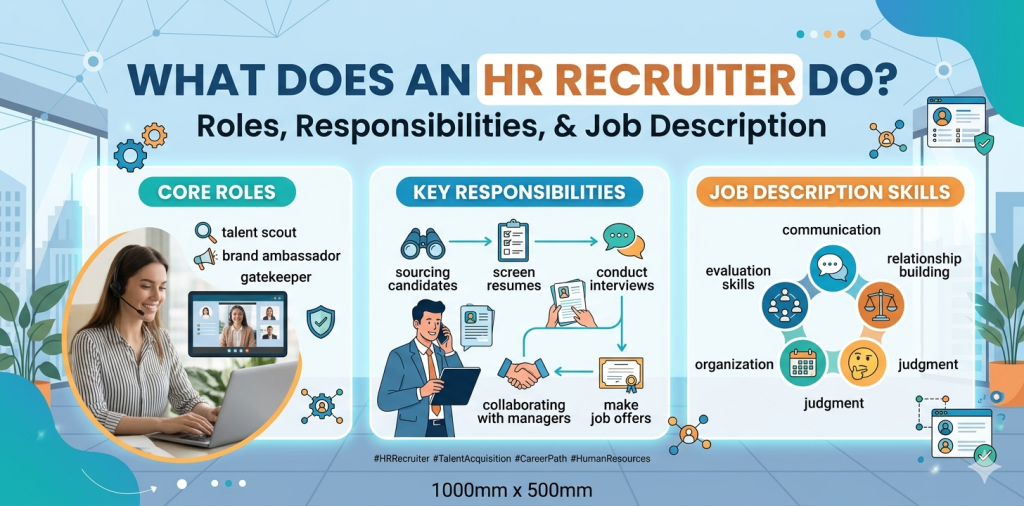
Their aim isn’t merely to fill seats, but to build the right chemistry that can sustain a long-term employment relationship. Apart from just paperwork, these tasks reflect the HR recruiter roles and responsibilities, which include sourcing talent, evaluating candidate potential, and aligning individuals with the company’s culture and goals. It means they actively hunt for great people — even those who aren’t currently looking for work – instead of merely waiting around for resumes.
This role varies depending on who signs the paycheck. The distinction between an internal recruiter and a staffing agency lies in their scope: internal recruiters serve a single organization, while agency recruiters act as external talent scouts for multiple companies. Regardless of the structure, their HR recruiter roles and responsibilities often involve screening hundreds of candidates to save hiring managers valuable time. This careful filtering begins the long and structured recruitment lifecycle that eventually leads to the right hire.
Following the 5 Stages of the Recruitment Lifecycle: From Job Post to First Day
It’s like having 500 people wanting one seat at a table.” To cope with this flood, human resources professionals employ a “recruitment funnel” — a wide-mawed filter that begins with hundreds of candidates and gradually constricts to one hire. This systematic process, called full cycle recruiting in technical terms, allows quality to stay high even if the application pool is being сореп or at least flooded with cv.
And though each company adjusts the exact timeline, this — virtually every time — is the unmistakable path: five distinct stages.
Sourcing: Ads and research to find candidates.
Screening: Looking at resumes, having introductory phone conversations to confirm basics.
Interviewing: in-depth meetings with the hiring team to evaluate skills
Selection: Finalist selection, offer creation, and pay negotiation
Onboarding: Filling out paperwork and getting the new hire settled on day one.
Depending on different HR recruiter roles and responsibility, “Screening” phase is the most critical checkpoint. Long before a hiring manager gets eye balls on a resume, the recruiter has to ensure that the person they’re recommending has the skills to perform at least up to minimum standards for the role, essentially becoming a quality control filter that saves their boss from wasting time interviewing people who don’t have a chance in hell of qualifying.
But the top candidates aren’t usually the ones pressing “apply.” If they want to recruit the best talent, hunters have to slink out of the funnel and into the wild.
Digital Headhunters: How They Find You Before You Apply
The best candidate usually already has a job. To access this “passive talent,” recruiters move from collecting applications to doing detective work. Sourcing candidates is where you proactively look for the very right person to fill that role, rather than waiting for resumes to appear.
Finding these hidden professionals involves Boolean search — a logic-based technique for typing commands in database search bars. HR recruiters filter millions of LinkedIn profiles down to a few exact matches using specific code words and then find candidates who have not even seen a job post yet.
Recruiters have different names for this type of recruitment (headhunting vs passive sourcing) but they all end up in the same place — an unsolicited message in your inbox. Headhunting suggests a targeted effort for executives whereas sourcing is the wide-scale process of identifying qualified individuals currently engaged in other employment.
Once a recruiter finds a match, the challenge becomes convincing that person to respond. Of course, success hinges entirely on how desirable the role sounds.
Building the Party Invitation: The Importance of a Job Description Beyond Simply Listing Expectations
Long before interviewing starts, a recruiter needs to turn a hiring manager’s rough wishlist into an irresistible advertisement. HR recruiter JD (Job Description) is like a VIP party invite: when the invitation looks drab, only the boring guests will come.
Companies use their employer branding strategy to respond to the question; why should anyone choose you over a competitor? Emphasizing culture and perks makes the organization appear as a desirable place to work, persuading slack candidates to apply well before they’ve even read through qualifications.
Mastering writing job descriptions means balancing hard technical requirements meets the marketing panache needed to sell the role. But when that advertisement is live, the response poses a new problem: processing the flood using digital sorting tools.
Applicant Tracking Systems (ATS): Organizing the Resume Tsunami
Once the job post goes live, a single HR recruiter job profile usually deals with hundreds of applications for one open position. To manage this influx, organizations utilize an Applicant Tracking System (ATS) – software that acts as a savvy digital filing cabinet. It instills order to the chaos so that human recruiters can prioritize the most promising candidates first.
Visualise ATS as a Resume search engine. Recruiters plug in specific skills to get matches, like filtering a shopping site by size or brand. Such technology brings you essential benefits of an applicant tracking system:
Organized: You have all profiles central and searchable.
Speed: Helps in decreasing your time to hire by screening effectively, also users get insights into relevant skills at a glance.
Fairness: It allows data tracking to be standardized, abiding by the law.
As much as people believe that robots reject auto-pilot, a human being is typically responsible for the final decision-making afterwards. The software just helps you prioritize the stack. Tools take care of the data, but the next stage requires an entirely different framework of human-oriented skills.
What Skills Do You Need to Become a Top-Tier Recruiter?
While software sorts data, the work demands high emotional intelligence. A good recruiter is like a diplomat, managing company demands and applicant aspirations. This makes clear communication one of the top need-to-haves for HR recruiter roles, because recruiters must ensure not only that successful candidates don’t feel neglected but even those whose applications are not moving forward.
Balancing these relationships requires military-grade organizational skills. As recruiters juggle multiple openings at once, they have to keep tabs on hundreds of emails without dropping the ball. This diligence in return protects candidate experience management — the industry catch-all for how an applicant feels throughout the process. Talented people are walking away without these occupational competencies essential to corporate recruiters.
Entry routes are elastic, generally valuing psychology or business degrees over the more prescriptive accreditations. They’re also used by professionals for behavioral interviewing, where past behavior is viewed as the best predictor of future performance.
Your Guide to the World of Recruitment: From Insight to Impact
Hiring does not have to be a mysterious black box. One of the biggest revelations about the work of an HR recruiter is that they are professional matchmakers, not just another hurdle on your path to a paycheck.
This insight into catching their eye:
Customize HR recruiter skills and responsibilities on your resume. Use their sourcing searches to optimize your LinkedIn keywords. Drop them a message to create professional ties.
When you match HR recruiter duties and responsibilities, you bridge a gap. Consider these professionals your allies, and you’ll be charting your career path with powerful advocates alongside you.
Conclusion
In today’s competitive job market, HR recruiters play a crucial role in connecting talented professionals with organizations that need their skills. From sourcing candidates and screening resumes to conducting interviews and managing onboarding, recruiters ensure that the hiring process runs smoothly and efficiently. Their expertise helps companies save time, improve candidate quality, and build strong teams that drive business success. Whether working internally or through a staffing agency, recruiters act as strategic partners in the hiring journey. This is why many organizations rely on the best IT recruiting and staffing firm to identify top-tier talent, streamline recruitment, and secure the right professionals for critical roles. Ultimately, effective recruitment is not just about filling vacancies—it’s about creating the perfect match between people, skills, and opportunities.